Showing posts with label Homestead Grays. Show all posts

Wednesday, March 20, 2013

Unpacking the Sand

Perception can be a powerful thing.  It's shaky at best, and only becomes further skewed by time filtering and reshaping it like a series of panes of glass.

When someone talks about sandlot baseball, your mind probably goes to one of two places, depending on age and point of reference:  either the iconic baseball movie The Sandlot, capturing a romanticized pickup game among friends, or perhaps to your own experiences playing baseball during your childhood.

Either way, the story is probably pretty similar:  long lost friends, even more long lost baseballs, and a intensely informal game of baseball.

There's only one problem:  sandlot baseball was so much more complex than that simplified, romanticized notion that comes to mind.

If you're interested in the topic, check out baseball historian Rob Ruck's Sandlot Seasons (warning: it's an academic history book, so it can be a bit dense for the casual reader).  In short, the sandlot world was a complex semi-pro system which wasn't all that far removed from the major leagues. 

On a given evening, you could find a crowd of thousands gathered to watch two of the top mill league teams playing.  The sights and sounds, food for sale, and passion of the fans could equal or exceed what you might find at Forbes Field or Shibe Park.  And perhaps most surprising, the players might be one in the same. 

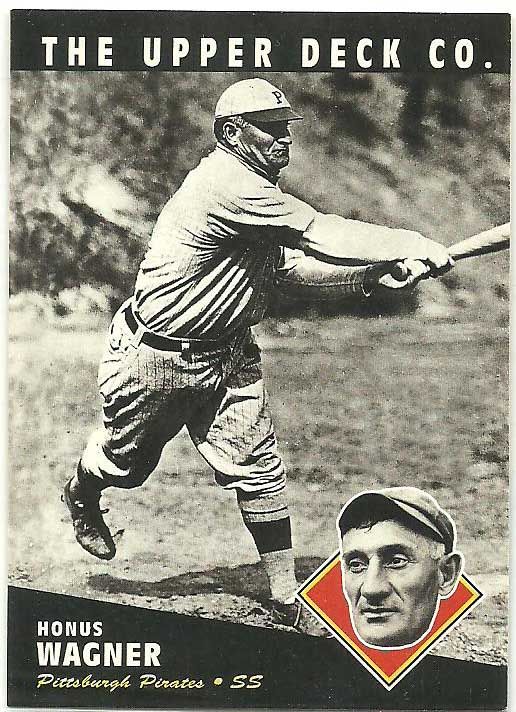
Baseball immortal Honus Wagner spent another half a dozen years playing for sandlot teams after retiring from Major League play.  Joe Tinker and Johnny Evers could be found playing sandlot games under not so well disguised pseudonyms to make a few extra dollars during an off day.  And countless former pro players and minor leaguers, black and white, would continue their careers on the sandlots years after their playing days ended.  Players for top teams could make a few hundred dollars a month (not adjusted for inflation), in addition to their daytime job.
As Ruck writes, "the game of baseball as played by the pros was much closer to nonprofessional ball, and players and spectators went back and forth between the two" (42).
It can be easy to get caught up in the numbers -hits, RBI, home run totals - and to think that tells the entire story of the game's history.  In a later post I'll get into the deceptiveness of so called hard data. 

But anyone who considers themselves a student of the game and a fan of its history could and should see a game that has changed significantly from the commercial behemoth we see today.  The game's evolution in and of itself is a fascinating topic.  But it's important not to lose sight of the people and realities behind those numbers, HoF plaques, and epic tales.

Wednesday, March 6, 2013

Pittsburgh's Other Baseball Teams

A lot of attention has been given to the Negro Leagues over the past two or three decades, and rightfully so.  Segregation of the major leagues remains perhaps the greatest black eye in sports history.  And while a great deal of attention has been given to the individual players who played in the major leagues, far less has been given to the the teams that played in the Negro National League.

Though I teach English literature, much of my writing and publishing focuses on social history.  I am currently working on a book that touches upon the role of Pittsburgh's NNL teams - the Pittsburgh Crawfords and Homestead Grays - in shaping black Pittsburgh's cultural identity.

I love the research process in general, and though I'll try to avoid allowing too many of the boring details of my work to creep into this blog, I have to say it's an amazing experience to comb through photo archives seeing such storied players in action on the field, and the explore both the baseball careers and professional lives of some of the game's greatest.

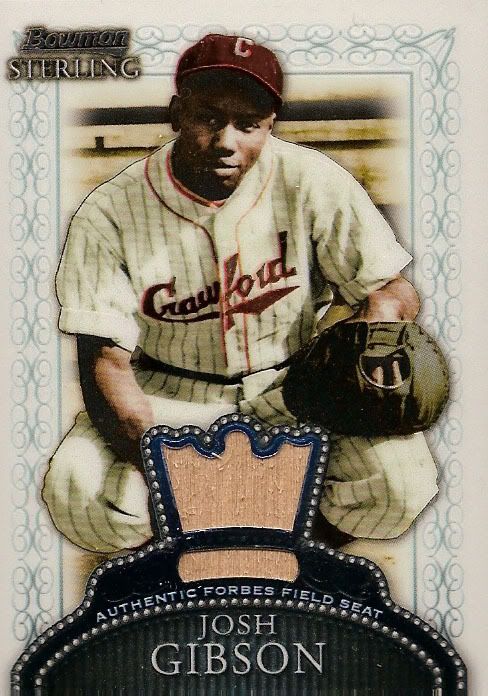
Quite a few sets, mostly from Upper Deck in the 2000's, have included some of the NNL greats.  I love picking up cards featuring the players with the Grays or Crawfords when I come across them, and I consider the cards as much a part of my Pirates collection as any featuring a player in black and gold.  After all, these players are integral to the fabric of baseball, and more specifically baseball in Pittsburgh.


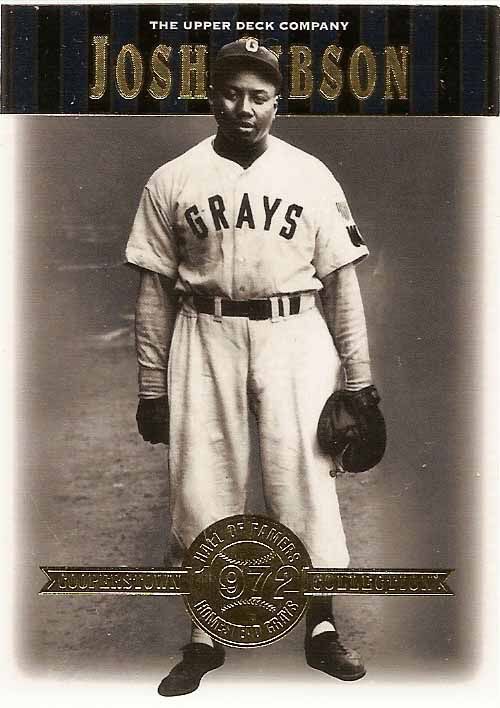
Most of the Negro League's greatest players - Josh Gibson, Satchel Paige, Cool Papa Bell, Judy Johnson - spend good portions of their careers in Pittsburgh.  Though Satch is more frequently featured in in photos from his brief time in the Major Leagues, there are quite a few cards memorializing these fantastic players during their time in Pittsburgh.  It's an area of my collection I hope to expand on more, so I'm sure there will be some future NNL posts (as well as the occasional book update).