The Topps brand is inexorably linked to the public conception of baseball cards. To anyone from the most die hard collector to the most casual fan, Topps is an unmovable force in the baseball card industry. Childhood memories are bound to the card designs of a certain year, the minute details of our most cherished cards branded into memory.
But cardboard nostalgia aside, Topps cards are as reliant aesthetically on their photography as they are on their card design. And unlike the polarizing debates over card design, whether you love the wood grain '62 and '87 sets (I do), or think the '75 and '60 sets veered too far from the traditional formula (I don't), Topps photograph is a far more nuanced debate that seems to come up far less often.

The first twenty five years of Topps cards offered little excitement or innovation for collectors in the on card photography. The cards followed a fairly predictable formula: posed photographs, typically in the team's home jersey, taken at the spring training complex. It was a logical plan: spring training would most likely have every player who would suit up for a given team during the season, barring trades, and in the pre-merchandise savvy era, there was no concern about teams wearing eighteen different versions of their jersey, with 4 alternate batting practice uniforms. Throughout the '60's, various season highlight cards would integrate full action shots, and the early '70's introduced the In Action cards, featuring large action photos.
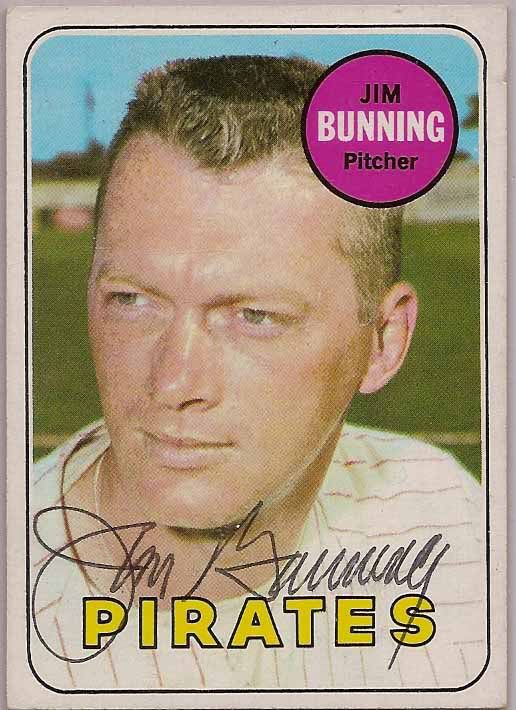
But the overall visual approach was fairly simple: if we have a photograph of that player in a vaguely current uniform, print it. If not, pay an intern to do a half-assed job airbrushing out the old logo. The result was a sequence of years using photos clearly from the same photo session of a player. Or better yet, players who appear in a string of airbrushed photos. For example, Hall of Famer Jim Bunning spent 1968 and most of 1969 playing for the Pirates. Despite appearing in two Topps sets, his only card in an actual Pirate uniform wouldn't come until the 1990 Pacific Legends set. Nice work, Topps.
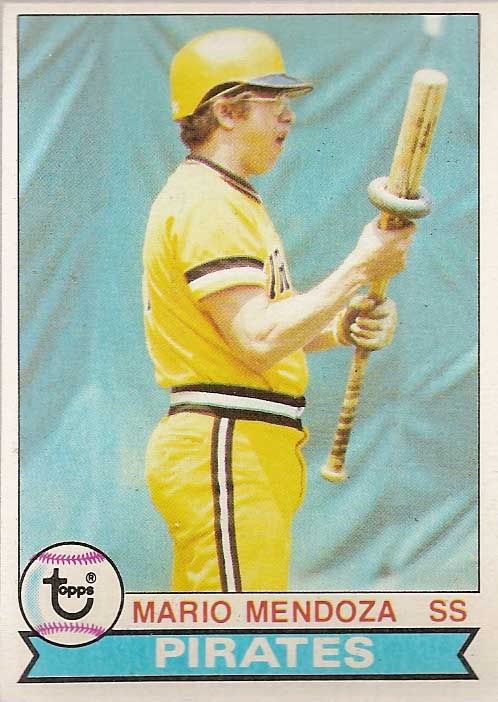
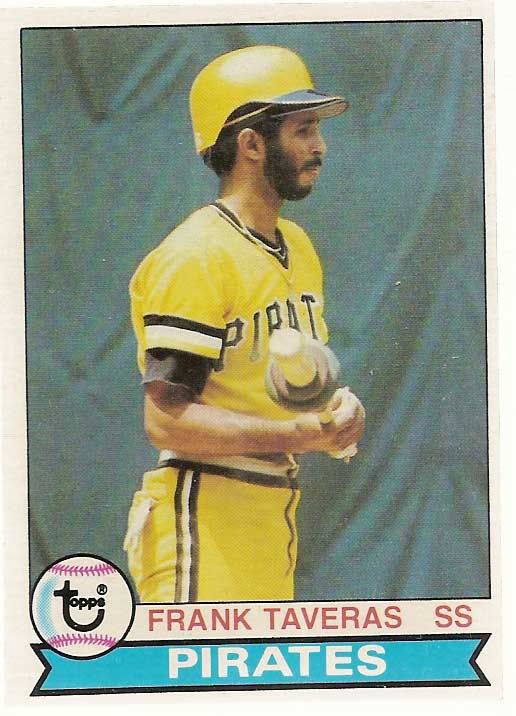
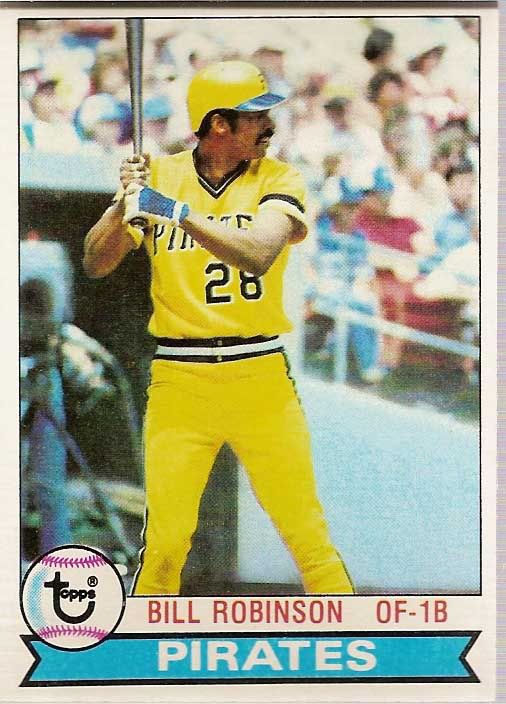
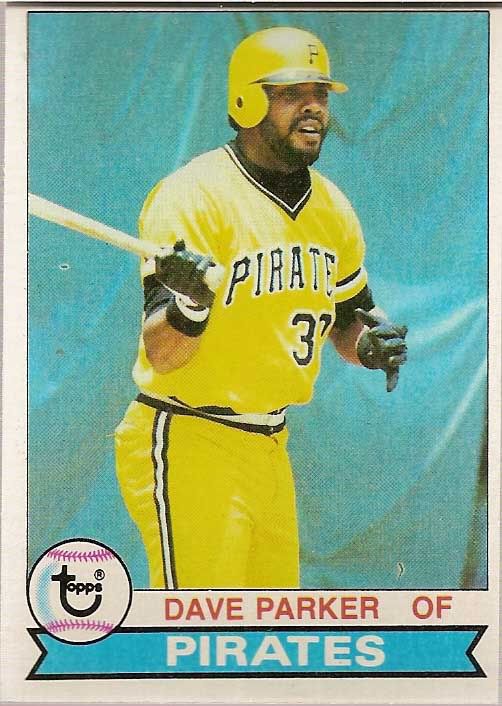
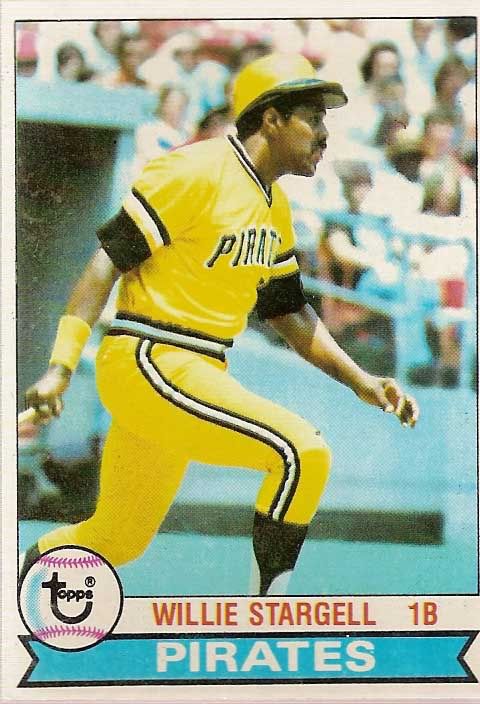
But even as Topps integrated more action shots into the base set by the late 1970's, the basic philosophy of getting as many photos as possible from one session still appeared to hold true. The Pirates 1979 team set holds a special place in my heart for many reasons. While it marks the last Pirates World Series victory, and a magical We Are Fam-a-lee club, it also marks an impressive feat in Topps photography. I'll let the photos below speak for themselves.


Seeing a pattern here?
The late 70's Pirates were known for their mix and match jersey combinations that included white pinstriped, black, and yellow pants and pullover jerseys. Instead, it would appear that almost half of the team set was photographed on the same day, in almost the exact same position in the batters box or on deck circle. Talk about variety.
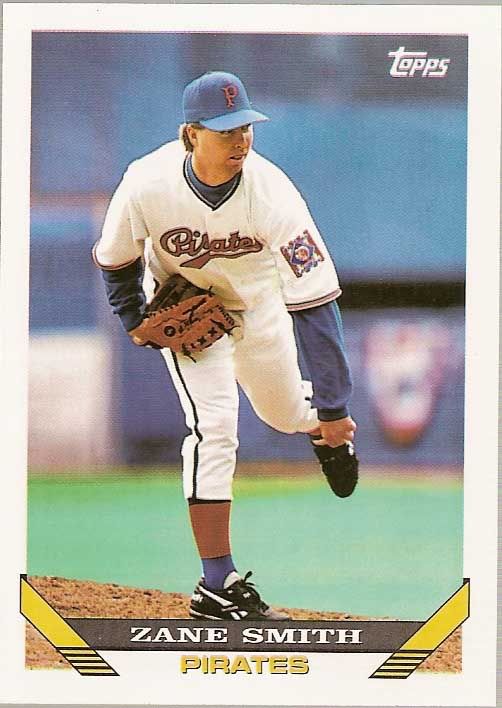
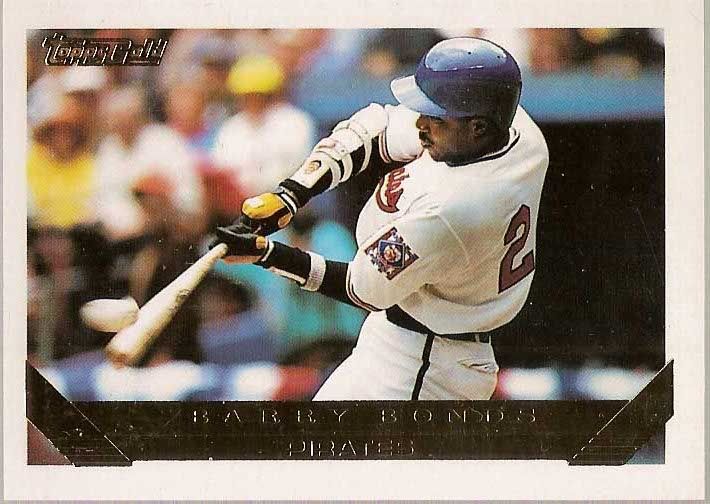
But it wasn't all bad. Though the posed or pseudo action shots dominated much of the '80's, Topps included some great photography in the 1990's, perhaps not coincidentally coinciding with the development of the Stadium Club brand. The 1993 set featured Zane Smith and Barry Bonds in 1938 throwback jerseys which the team only wore for one game. The jerseys are a unique nod to an 86-64 team that finished in second place, behind HoF'ers the Waner brothers and Arky Vaughn. The '92 season marks the only time to date that the Pirates have worn the red/white/blue colored jerseys in a throwback game.

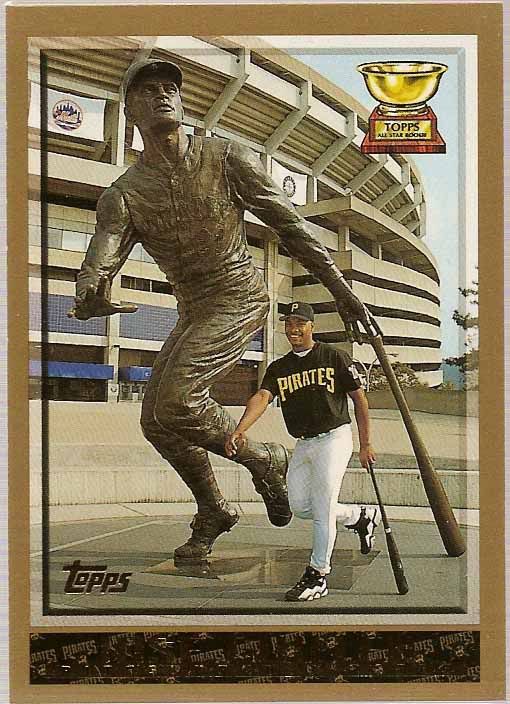
The photography in the 1998 set is perhaps my favorite of any Topps set, featuring an array of creative posted shots, horizontal photos, and unique action shots. The Pirates team set also features two of my favorite Pirate base cards, #146 Jose Guillen and #365 Jermaine Allensworth. At the time, Allensworth and Guillen appeared to be part of a young core of the Pirates (first) 5 year rebuilding plan. Guillen's, a 21 year old Dominican right fielder with a rocket arm when he reached the majors in 1997 put up strong numbers for his age in his rookie season. His 1998 card features him alongside the statue of Roberto Clemente outside Three Rivers Stadium, a parallel perhaps a bit ambitious for the promising Guillen, but one with unavoidable similarities nonetheless.

Allensworth's, a first round pick in 1993 using the compensation pick gained from the departure of aforementioned Barry Lamar Bonds. Drafted out of Purdue, Allensworth moved quickly through the Pirates system, reaching AAA by 1995 and featuring a high contact/speed combination that would become the hallmark for a revolving door of almost identical players for the following decade until the arrival of Andrew McCutchen. Allensworth was one of my favorite players from 1997's Freak Show team that made an improbable run at the NL Central pennant. Despite his pedigree and minor league success, Allensworth saw dips in his stolen base total and average which, coupled with his below average power, drove his OPS+ numbers into 80-90's. He was traded to frequent trading partner Kansas City midway through the 98 season, and would see his last major league action with the Mets in 1999.
Allensworth's 1998 Topps card features a great play at the plate at home against the Reds. I love the way the elevated camera angle captures the play, and it's a bonus that the card features the Pirates black home alternates that were worn from 1997-2005.
Check back tomorrow for the second part of this series. Tomorrow will take a look at the 2000's, as Topps reverts back to some of their old tricks, and the eventual discovery of licensed photography.
 I don't have many good things to say about Topps' propensity for inserting cheap game used cards with low serial numbers into super duper high end products. But I can say that I like it when I can add them on the cheap.