Showing posts with label wwdhpt wednesday. Show all posts

Wednesday, July 9, 2014

Wait, When Did They Play There? Wednesday


The length of a baseball season and relatively large roster makes it inevitable that there will be a few players each year who only appear in the majors briefly.  And much to the chagrin of many team collectors, many of those players never find their way onto cardboard immortality.

Other times, a card has you asking "Who the heck is that?"

As of 5 minutes ago, here is what I know about Paul Geil:

He appeared on a Pirate card in 1960
I really like the 1960 set

Note, astute reader, that only one of these deeply insightful facts actually involves Paul Geil.

Geil appeared in only 20 games for the Bucs, including 16 in 1960.  He appeared in 102 major league games between 1954 and 1961, but was never particularly effective - or in the majors for all that long in any given year.

You could probably argue his football career was actually far more productive.  Gail was an All-American twice, finished second in Heisman Trophy voting, and won a trophy case worth of other awards as at the University of Minnesota.  All that hardware got him into the College Football HOF in 1975.  He also served as Minnesota Vikings color commentator from 1962-69, and as U of M's athletic director from 1971-89.

Oh, and did I mention he picked up two World Series rings (the Bucs in '60, and the Giants in '54)?


Thursday, June 13, 2013

"Wait, When Did He Play There?" (Not) Wedesday


Alright, I'm a day late on this one.  But it was just too good to wait on.

Walt Terrell enjoyed a pretty lengthy carer as a starter in the majors for a decade.  He was a solid, if unspectacular, pitcher who put up pretty consistent numbers across his career.

...and then he came to Pittsburgh.

Terrell had put up era's in the high 3's to low 4's for most of his career until he his a rough patch with the Yankees in 1989.  Presumably a bounceback candidate, the Bucs signed him for the 1990 season. 

There would be no bounce.

In 16 starts with the Bucs,  he wen 2-7 with a 5.88 ERA before being released in July.

But of course n typical Pirates fashion, this wouldn't be the last seen of Terrell.  He caught on with Detroit for the second half of the season, and would stick in their rotation with mixed success for the next two seasons.


His Bowman release is the only mainstream card to feature Terrell as a Pirate, though his 1990 O-Pee-Chee does note "now with Pirates" in small text near his front knee.

As I've mentioned, the Pirates track record with free agent signings is far from stellar.  But their track record with released players finding success elsewhere is off the charts.

Wednesday, June 5, 2013

"Wait, When Did He Play There?" Wednesday

Alright, this one might be a little less obscure.  Or maybe not, depending on our age.

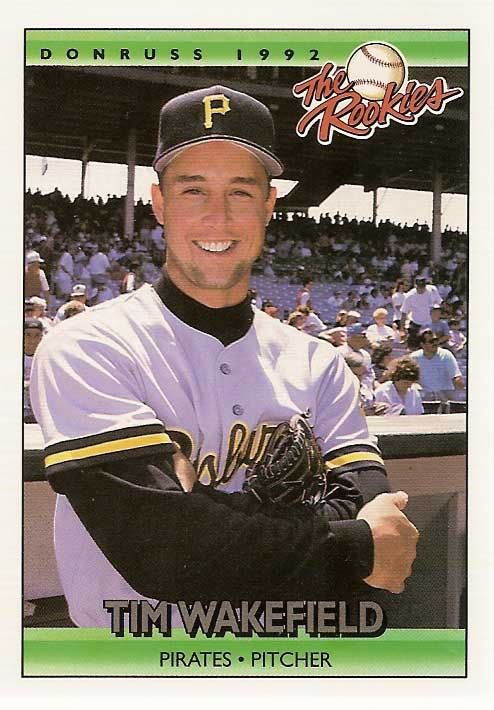
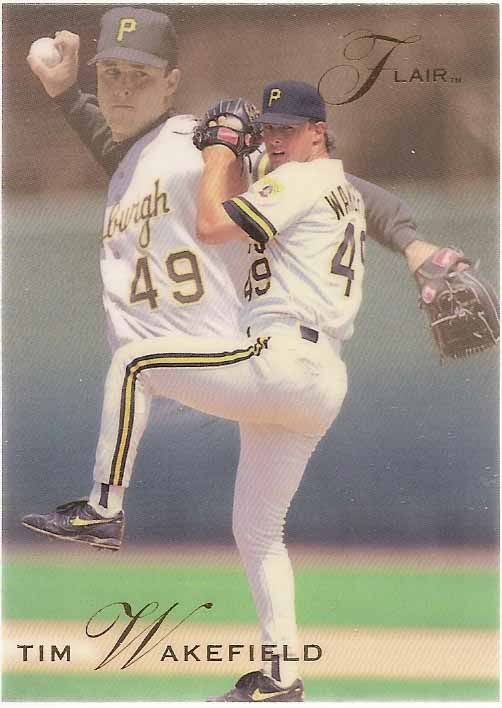
Long before Tim Wakefield was setting records and winning World Series as a successful starter and clutch playoff performer for the Red Sox he was...a successful starter and clutch playoff performer for the Pirates.

...who them promptly released him.  Queue history.

I think there have been enough ESPN special features, Outside the Lines pieces, and Sportscenter clips on the Sox/Yanks dominated ESPN that most of us know the story of Wake.

Minor league flameout attempts to salvage career via knuckleball.  Rookie sensation.  Disaster the next year.  Red Sox legend.
The specifics are a bit more complicated.  Aren't the always?  It's undeniable that Wakefield looked at best like a questionable pitcher coming out of the '93 season.  His '94 season was equally disastrous, leading AAA in walks and losses.


But the Pirates were also entering what has turned out to be two decades of losing baseball.  And Wake wasn't exactly holding back any significant minor leaguer stars by staying on the roster.  To flat out release a player who had had significant success in the majors seems foolish at best.

And maybe that's the bigger theme here.  The issue isn't that players like Wakefield or Jose Bautista have gone on to have impressive careers elsewhere.  Someone always gets away.  Brian Giles and Jason Bay worked out the opposite way, and I can assure you Pirates fans are not complaining about that.

The larger issue is giving away potentially valuable assets for little to no return.  Bautista and Wake were both players on glaringly slow developmental paths - Bautista's career was derailed by being a Rule 5 pick (which never should have happened in the first place,since the Bucs had 40 man spots open during the Rule 5, lost him, only to trade for him later in the season), and knuckle ballers are typically slow to develop.  The teams these players were jettisoned from were, simply put, bad.  Leaving a questionable player on a roster spot would not hurt, if it means losing Chris Duffy or Rick White. 

But what's done is done.  Instead, we get to both appreciate the time he did spend in Pittsburgh, and be regularly reminded by ever ESPN clip showing him giving up a barrage of homers in black and gold, before cutting to a sequence of him baffling Yankees hitters at Fenway.  Thanks ESPN!


Wednesday, May 22, 2013

"Wait, When Did He Play There?" Wednesday

As a kid, my thought process for picking my favorite players wasn't particularly complex.

Sometimes it required having a cool name (Jeff Bagwell, David Justice, Andy Van Slyke), or players whose Starting Lineup figure I owned.

Starting Lineups.  Your reaction is most likely either utter confusion about what I'm talking about or flashbacks to an investment gone horribly wrong, depending on whether or not you were collecting in the 90's.  There really isn't a lot of middle ground.

Except for me.  As a kid, they weren't investments.  Value didn't matter.  Heck, the player wasn't really even that important.  Instead, I spent my evenings playing an intricate game of baseball on our gameroom floor while my dad would be watching sports.  Our forest green carpet served as the field, with those mini ice cream helmets serving as the outfield wall (and the couch serving as my own version of the green - or in this case a hideous shade of peach - monster).  Crumpled up wads of paper served as the ball, and SLU's wide range of batting, pitching, and fielding poses allowed me to field a full roster of batters with permanent fielders.

What happened on the real baseball diamond didn't matter much.  Instead, the exploits on my carpet were far more influential in determining my favorite players.  That's the reason I still think Carlos Baerga is awesome.  Or that Brooks Robinson isn't so great (he was in a very lame pre swing hitting pose that was terrible for hitting my paper baseballs).

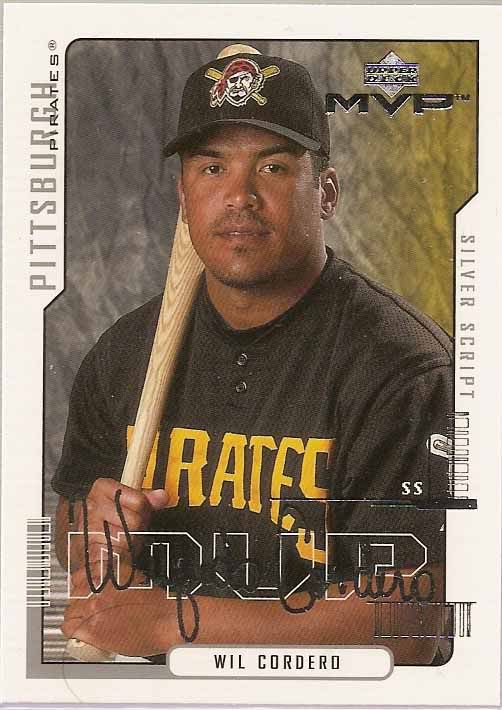
And the star of the fielding bunch was Wil Cordero.  Posed in jumping and throwing position at second base and wearing a bright blue Expos jersey, Cordero was, simply put, an awesome piece of plastic.

So when the Pirates signed Cordero for the 2000 season, the slightly older, more mature baseball fan certainly grasped that we weren't getting the best player on the face of the planet.  But the 7 year old inside me did not care one bit.  And it didn't matter that the slick fielding middle infielder of my fantasy league had since become a lumbering corner outfielder.
And then Wil Cordero actually played baseball.  Cordero was maddening in his time with the Pirates.  He consistently misplayed balls down the line in Three Rivers rounded corners. 

He hit well during his time in black and gold, but it certainly won't be the way his career is remembered.  Even by me.  I'd rather just stick to the plastic version.


Wednesday, April 24, 2013

"Wait, When Did He Play There?" Wednesday

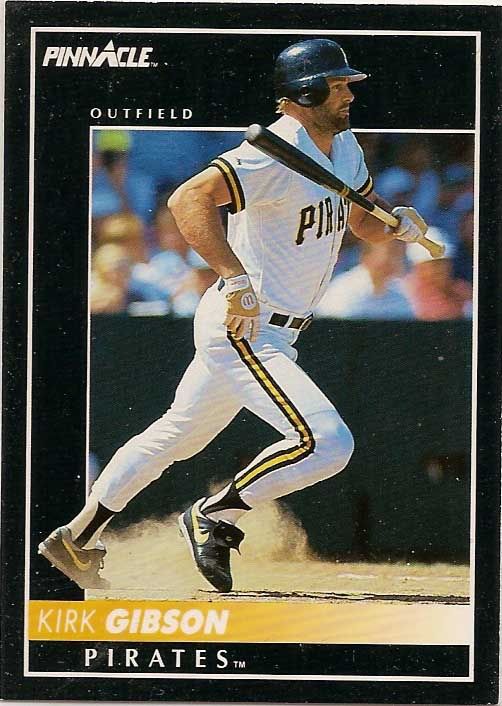
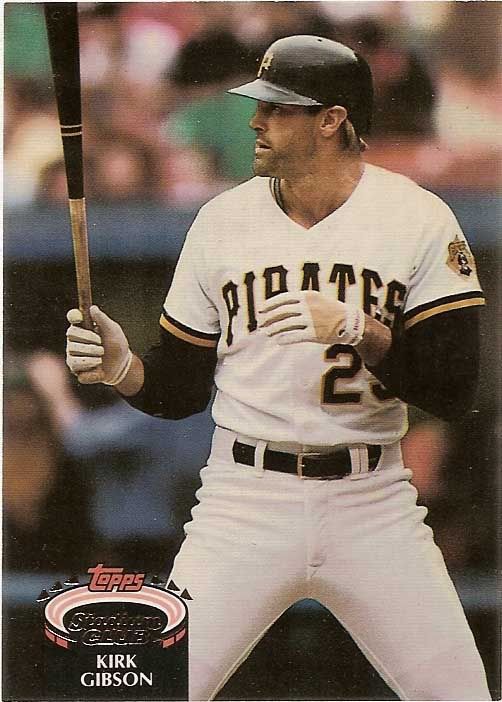
Somewhere between being a World Series hero and becoming the surly manager of the D'Backs, Kirk Gibson was a Pirate.

Don't remember that?  Well, there's good reason for that.

Gibson signed with the Pirates in 1992 as a 35 year old.  He was coming off of a mixed season with the Royals, seeing his batting average drop to .236, but retaining decent on base skills and some power.  He looked to slot into the Pirates outfield situation and replace at least some of the production that Bobby Bonilla took with him to New York.

Instead, hit a measly .196 across 60 at bats before being released.

And setting the script for 2012 Nate McLouth, Gibson (like so many others) would go on to continue producing upon leaving the Steel City.  Gibson signed with the Tigers for the '93 season, and would hit 46 HR's over the next three seasons for Detroit while maintaining a high OBP.

It would be safe to say luck (or perhaps good scouting) has not smiled favorably upon the Bucs in quite some time.


Wednesday, April 17, 2013

"Wait, When Did He Play There?" Wednesday


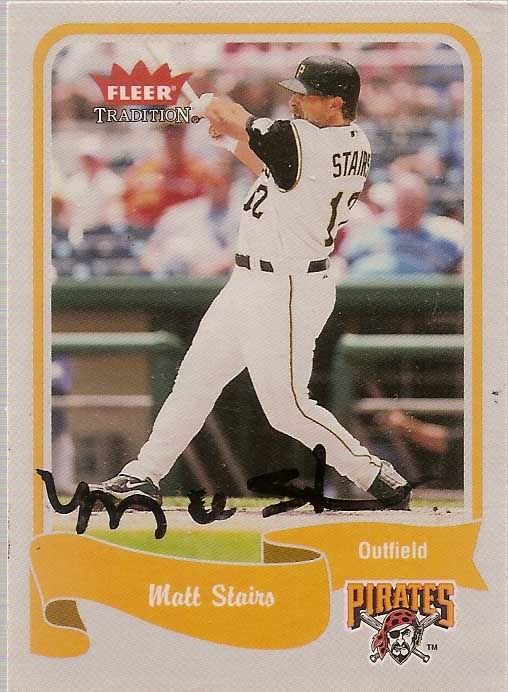
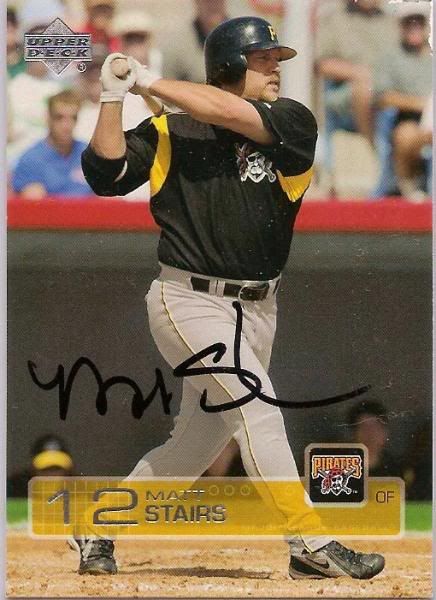
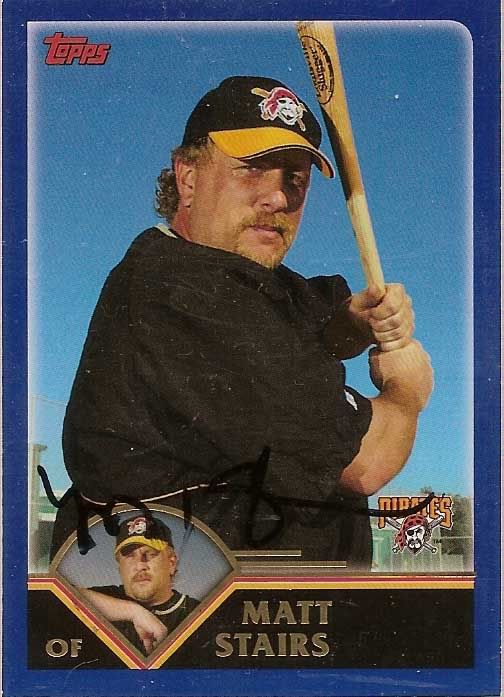
Maybe I'm cheating a bit with this week's post.  After all Matt Stairs played everywhere.  But I would still venture to say few think people think black and gold when they think of Stairs. 

Stairs, lefty masher extraordinaire, spent 2003 with the Bucs.  His defensive limitations undoubtedly impacted his playing time, as did the presence of Reggie Sanders and Craig Wilson, who displayed strikingly similar skill sets.

Satirs his 20 homers, taking advantage of the Clemente Wall, in just over 300 ab's, putting up a godly .561 slugging percentage.

Better yet, he was just flat out fun to watch.  Every at bat looked like Satirs just wanted to hurt the baseball.  At 5'9", a generously listed 200lbs, he may have looked better with an axe in his hands and helmet on his head than wooden bat and gold P logo.

But maybe the most impressive part about Stairs black and gold adventure isn't what he did with the Bucs, but rather what he did after.  Stairs was 35 in '03, and like many power first mashers, it wouldn't be out of the question to think that losing just a tick or two off his bat speed could send his numbers plummeting (see Burnitz, Jeromy just three years later). 

Instead, Stairs went on to play almost another decade, hanging it up after 2011.  Perhaps equally surprising is that he saw steady playing time until 2009.

Wednesday, March 27, 2013

Wait, When Did He Play There? Wednesday

As I mentioned earlier today, the Pirates have a less than stellar track record with free agents over the last 20 years.  Aside from a collusion-filled 2002-03 offseason where the Pirates picked up Kenny Lofton, Reggie Sanders, Jeff Suppan, and Matt Stairs at rock bottom prices, the typical offseason additions are a list of past their prime corner outfielders and no-hit backup shortstops. 

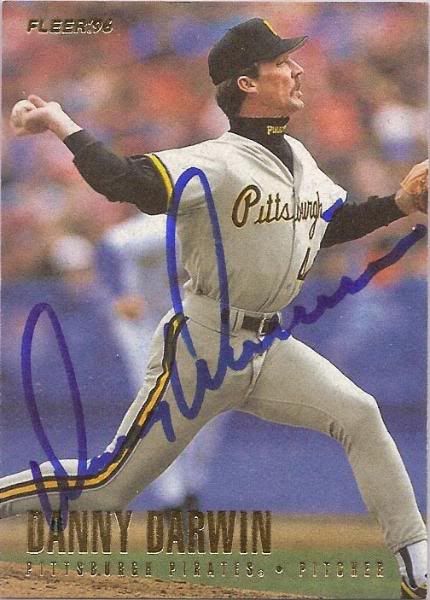
So a list of the top FA pickups is bound to be unimpressive.  But the fact that Danny Darwin could be the top Pirates free agent signing during that period?  Yeah...

It's not that Danny Darwin was a bad pitcher.  He spent 21 seasons in the majors working almost exclusively as a starter in every season (never winning more than 15 games).  But when the Pirates signed Darwin for the 1995 season, he was 40 years old.

Arguably the Pirates best free agent pickup since genie pants were in fashion was a 40 year old pitcher. 

Still, Darwin pitched admirably in 17 starts, compiling a 7-9 record and 3.02 ERA.  Most importantly, he pitched well enough to get dealt to Houston for future Pirates closer Rich Loiselle.  Of course upon arrival in Houston, Darwin's numbers imploded in a fashion that even the Astrodome couldn't salvage.  Still, Darwin managed to pitch another 3 years in the majors before finally calling it quits.

But when people think of Danny Darwin, they will undoubtedly remember his 15 seasons spent between Texas' two teams.  Few will recall one of the greatest Pirate signings of the past quarter century. 

And maybe that's not a bad thing.

Thursday, March 21, 2013

When Did He Play There Wednesday


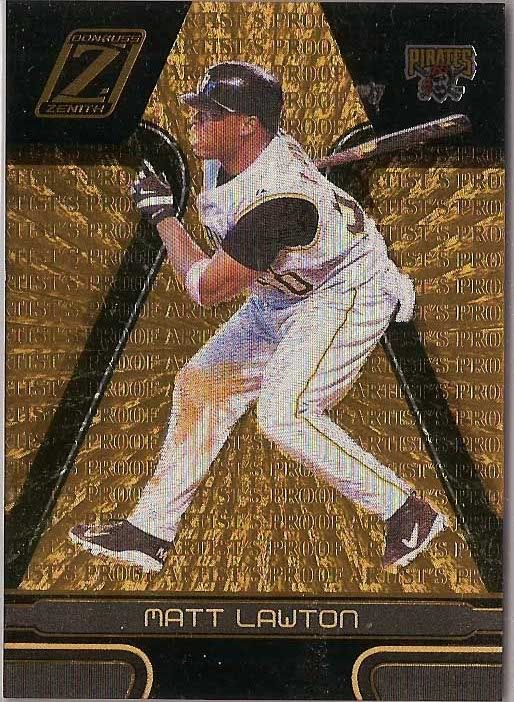
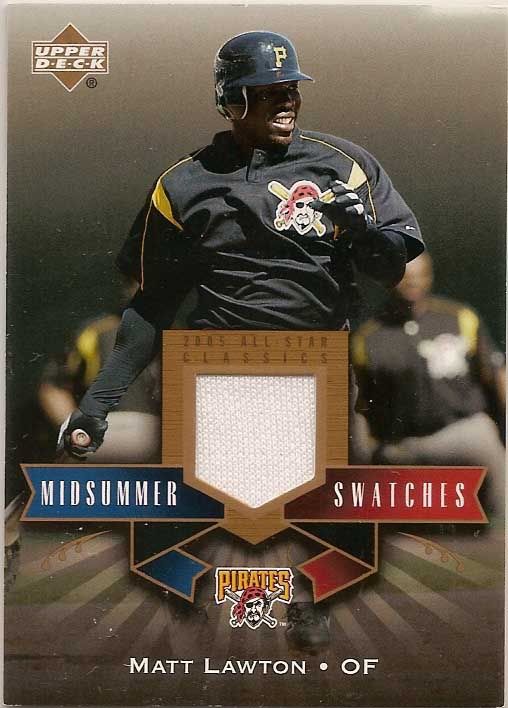
Matt Lawton's path to Pittsburgh may take longer to explain than the actual amount of time he spent in a Pirates uniform.

Lawton was the Pirates haul for dealing away once franchise player Jason Kendall.  By 2004, Jason Kendall was a .300 singles hitter making $10 million on a team where $10 million would go a long way.  In the winter of 2004, the Bucs dealt Kendall and a boatload of cash to Oakland in exchange for Arthur Rhodes.

If you're asking what a terrible team could possible do with an aging middle reliever, stay tuned.

Then-GM Dave Littlefield moved Rhodes to Cleveland, a frequent trading partner of the Pirates, in exchange for 2004 All-Star Matt Lawton.  The trade never made a whole lot of sense, since Lawton was a clear regression candidate and the power-hungry Pirates had power hitting Craig Wilson available to play right.

Lawton would put up solid, though unmemorable, numbers in 100 games with the Pirates before being shipped to the Cubs for Jody Gerut, and then flipped again to the Yankees.  If you were wondering where Lawton's career went from there, you haven't been reading this blog nearly enough.

Lawton appeared in 11 games for the Mariners in 2006 before disappearing from baseball at age 34.

Thursday, March 7, 2013

Wait, When Did He Play There Wednesday

Every team has them - those players who you barely even remember playing there.  Whether it's a superstar who played his waning days in a new city or a journeyman pitcher who gave your team 160 forgettable innings in the middle of his career, the Pirates have been home to quite a few over the years.  This semi-regular feature will take a look players who spent some less than memorably time in the 'Burgh.

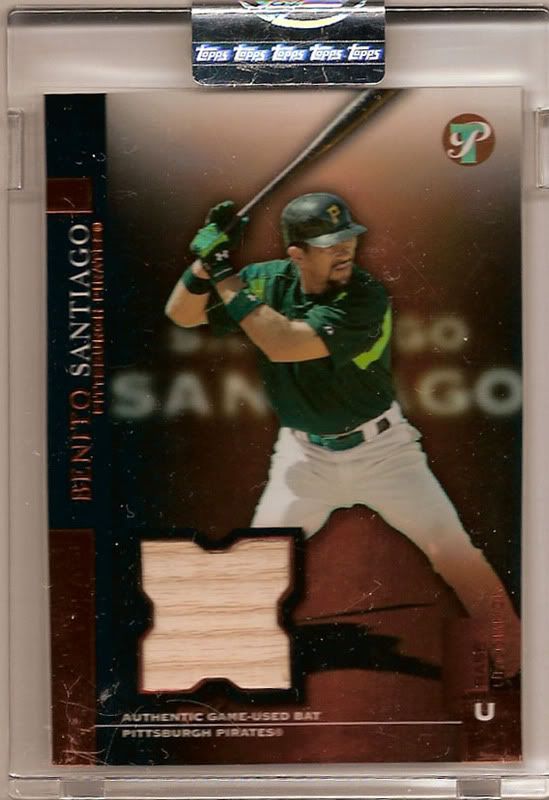
Before the 2004 season, the Pirates traded relief prospect Leo Nunez for 40 year old Benito Santiago.  Despite his age, Santiago had hit for decent average and power in the previous three seasons, making the All-Star team three years earlier, and was expected to take the place of the traded Jason Kendall.  Instead, Santiago (and his $2M salary) were released by early May after a whopping six games.

I love the look of Santiago's signature, and this is one of my favorite autographs both because of the long and successful career he had before coming to Pittsburgh, and the card's clean design and on card signature.  Amusingly, this card is from Topps Update, which was released months and months after Santiago's release, and is one of only a handful of certified autos Santiago has.

Santiago also had a bat card from 2004 Topps Pristine.  Despite having a game used and auto card as a Pirate, he never made it into the base Topps set in black and gold.